

The Hardest Part of AI Isn’t Intelligence. It’s Trust.
Artificial intelligence and robotics are advancing faster than ever.
Machines can inspect offshore platforms, monitor pipelines, navigate hazardous environments and support decisions across critical infrastructure. Every week seems to bring another breakthrough, another demonstration, another promise of what the technology will soon be capable of.
Yet for organisations operating critical assets, the biggest question has never been whether AI can perform a task.
It’s whether they can trust it to.
Because in safety-critical industries, a successful demonstration is only the beginning. Before a technology can be deployed, operators need confidence that it will perform reliably, that its limitations are understood, and that when something goes wrong, the risks have already been anticipated.
That’s where the conversation changes. The challenge becomes building enough confidence in AI and robotics for organisations to deploy them safely, responsibly and at scale.
To explore what responsible AI deployment really looks like, we spoke with DNV, Official Host Partner of Bridging the Gap: Energy Innovation Deployed, whose work sits at the intersection of innovation, safety and assurance across the energy sector. As organisations work to move new technologies from innovation to deployment, DNV’s perspective highlights why trust and assurance have become central to that journey.
Autonomy Adds Capability and New Kinds of Risk
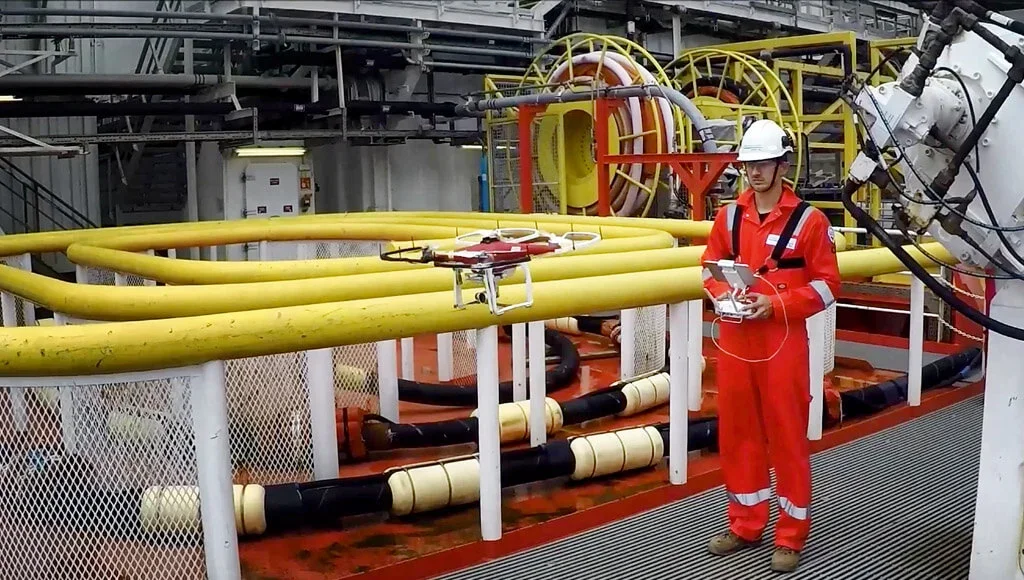
For decades, automation has helped industries become safer, faster and more efficient. AI and robotics are accelerating that progress, taking on tasks that would otherwise expose people to hazardous environments, from inspecting offshore platforms to monitoring critical infrastructure.
But as systems become more autonomous, a new challenge begins to emerge.
“The biggest tension between safety and innovation is the drive towards greater autonomy while maintaining trust, transparency and accountability,” DNV explains. “As systems become more autonomous, their decision-making can become increasingly difficult to explain, making it harder for operators to understand, challenge or trust their outputs.”
Operators must therefore understand how a system reaches its decisions, not just whether it performs.
Data presents another layer of complexity. AI systems rely on large volumes of representative, high-quality data to learn, navigate and detect anomalies. Yet in many industrial environments, gathering data that accurately reflects every operating condition, edge case and potential failure scenario is far from straightforward. Without it, even the most advanced systems can struggle to perform reliably.
For DNV, successful deployment requires creating the assurance that allows innovation and safety to progress together.
Trust Doesn’t Happen by Accident
It´s often treated as something that develops over time.
For DNV, it’s something that must be deliberately built.
Responsible deployment isn’t about introducing AI or robotics into an operational environment and hoping for the best. It begins long before a system is switched on, through a structured process that identifies potential failure modes, defines performance requirements and generates the evidence needed to demonstrate that a technology is fit for its intended purpose.
Crucially, that process is never one-size-fits-all.
DNV’s work with Havtil, the Norwegian Ocean Industry Authority, provides a real-world example. In examining the safety implications of AI in the offshore petroleum sector, DNV explored how existing regulatory frameworks can accommodate AI and highlighted areas including data quality and transparency as critical to building trust in its use.
To illustrate what that gap can look like in practice, consider an inspection robot sent to survey an offshore platform. In a controlled demonstration, it performs flawlessly, spotting corrosion and structural faults faster than a human team. But the open sea is no longer a controlled demonstration environment: salt spray may degrade its sensors, an unfamiliar swell may disrupt its navigation, and a corroded joint unlike anything in its training data may go unflagged.
This is the kind of gap that can contribute to the so-called “valley of death” between successful demonstration and commercial deployment. Proving that a technology works is only one step; organisations also need evidence that it can perform reliably, and that its risks can be understood and managed, in the environment where it will operate.
While AI and robotics continue to evolve rapidly, DNV believes the industry’s greatest challenge is ensuring organisations understand the risks before deployment. Dynamic operating environments, variable data quality and autonomous decision-making all introduce uncertainty that must be identified and managed.
This is where structured assurance - delivered through DNV’s Technology Qualification (TQ) approach, becomes critical. Rather than slowing innovation, it provides the evidence that allows organisations to adopt new technologies with confidence, knowing the risks have been identified, assessed and appropriately managed.
The Regulation Gap is Often an Evidence Gap
As AI and robotics continue to evolve, regulation is often portrayed as the obstacle standing in the way of innovation. DNV sees the challenge differently: in many cases, the real gap is not the absence of regulation, but the evidence needed to demonstrate that a technology can be deployed safely.
“The current lack of AI- or robotics-specific regulation is not necessarily a barrier to deployment,” the organisation explains, “provided organisations can demonstrate that these technologies have been developed responsibly, with risks identified, mitigated and managed through appropriate safeguards."
In reality, AI and robotics are not operating in a regulatory vacuum. Existing frameworks covering health and safety, cybersecurity, data privacy and sector-specific requirements already apply, regardless of whether autonomous systems are involved.
Where the challenge lies is in addressing questions those frameworks were never designed to answer.
How do organisations evaluate autonomous decision-making? How should explainability be demonstrated? Where does accountability sit when systems continue learning over time?
These are the questions emerging frameworks such as the EU AI Act and DNV’s own Recommended Practice (DNV-RP-0671) are beginning to address through a risk-based approach.
For DNV, however, the objective isn’t simply to create more regulation. It’s to generate better evidence. When organisations can demonstrate sound engineering, robust risk assessment and appropriate safeguards, innovation can continue to move forward safely, even as regulatory frameworks evolve.
AI Changes the Human Role, But Doesn’t Remove It
Greater autonomy changes where human expertise sits in the decision-making process. Rather than removing people, AI shifts their role towards oversight, interpretation and intervention when systems encounter situations they were not designed to handle.
“In safety-critical applications, human oversight remains essential,” DNV explains. “People provide judgment, contextual awareness and accountability when unexpected situations arise.”
Successful deployment therefore depends not only on the technology itself, but on designing the relationship between people and autonomous systems from the outset - including who makes decisions, when human intervention is required and where accountability sits.
Looking Beyond the First Contract
AI and robotics will continue to evolve at an extraordinary pace. New capabilities will emerge, autonomy will increase, and the technology itself will become more sophisticated.
But DNV believes the organisations that succeed won’t necessarily be those with the most advanced technology. They’ll be the ones that inspire confidence in how those systems are developed, deployed and governed.
“My advice would be: don’t treat safety and compliance as barriers to innovation. Treat them as enablers of successful deployment,” DNV says. “You don’t need to eliminate every uncertainty before deploying a new technology. What matters is understanding the risks, assessing their consequences and implementing appropriate safeguards.”
The goal, DNV argues, isn’t to prove that an AI system or robot will never fail. It’s to demonstrate that when failures occur, they are understood, anticipated and managed in a way that protects people, assets and operations.
As conversations continue at Bridging the Gap this September, DNV’s message is a timely reminder that the future of innovation depends not only on what technology can achieve, but on the confidence to deploy it responsibly.
Because innovation doesn’t scale through capability alone.
It scales through trust.
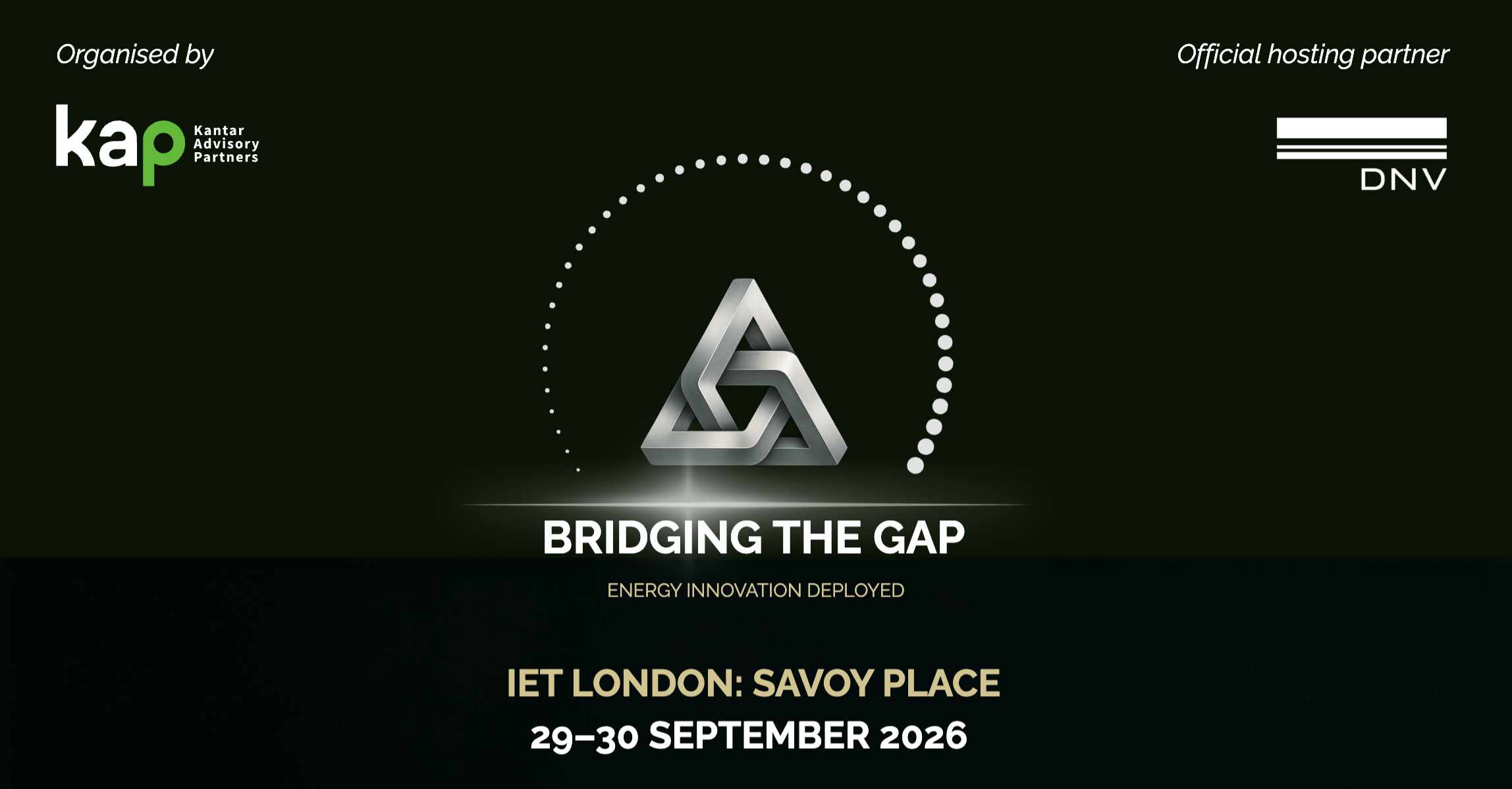
These questions will continue at Bridging the Gap: Energy Innovation Deployed, taking place on 29-30 September at IET Savoy Place, London.
Join the conversation and meet the organisations working to turn promising innovation into real-world deployment.
Explore Bridging the Gap and secure your place HERE
.
Want to feature in our newsletter or expert series? Get in touch at info@kantaradvisory.com
