
What robotics teach us about deployment ?
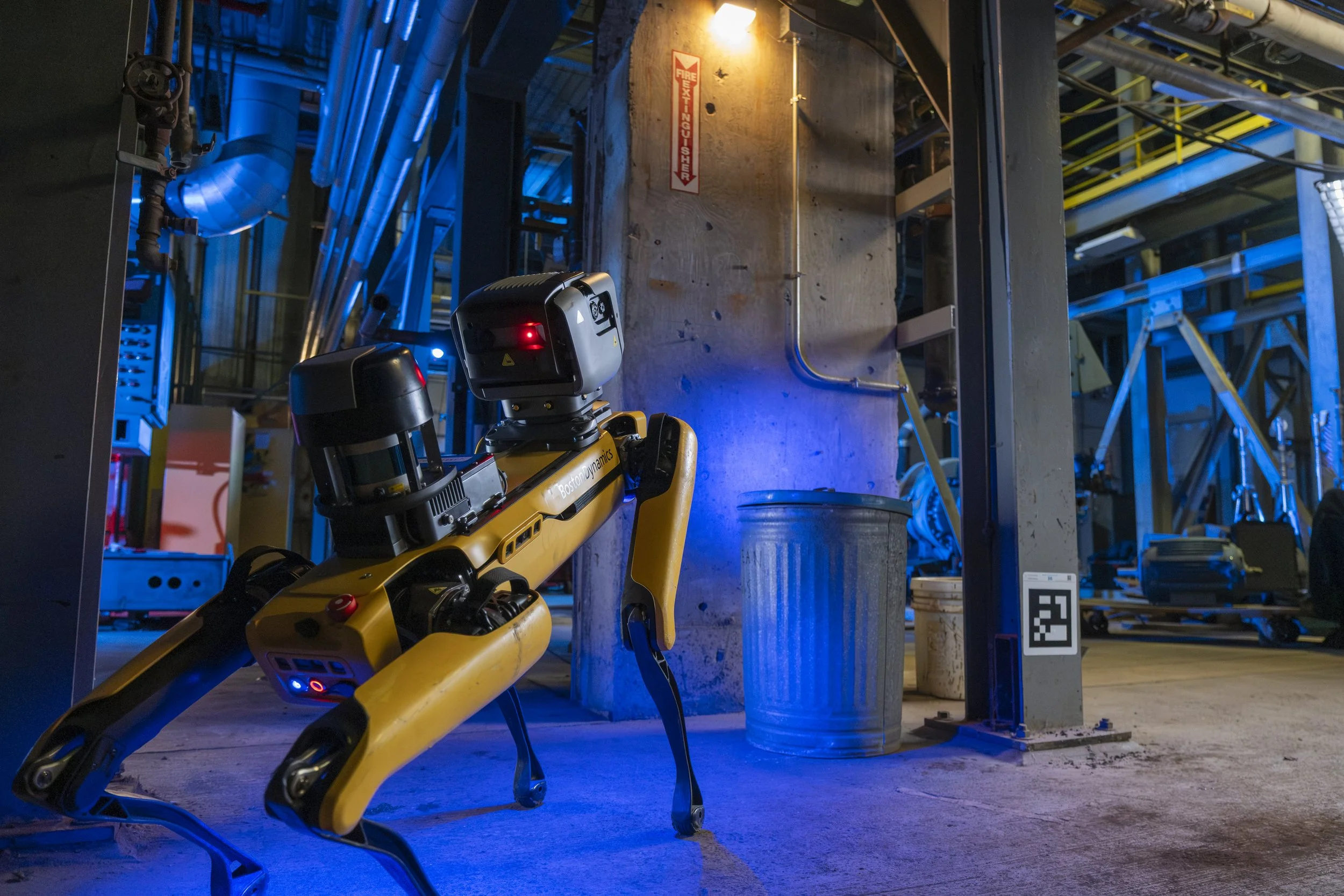
What Boston Dynamics reveals about the real work of deployment
Most robotics stories are about what a machine can do in a demo. The harder, less visible question is what happens after: whether it does useful work, safely and reliably, day after day, in the real world. And the real world doesn't grade on a curve.
That distance - from working technology to deployed technology - is where KAP does its work. So we went to Boston Dynamics, one of the few companies to have moved robots out of research and into the field at scale, across factories, distribution centres and energy sites where failure has consequences. Their answers, given by a company spokesperson, kept returning to a truth we see well beyond robotics: in energy, in shipping, in any hard to abate sector, the technology is rarely what holds things up, the lack of coordination around it is.
Groundwork before breakthrough
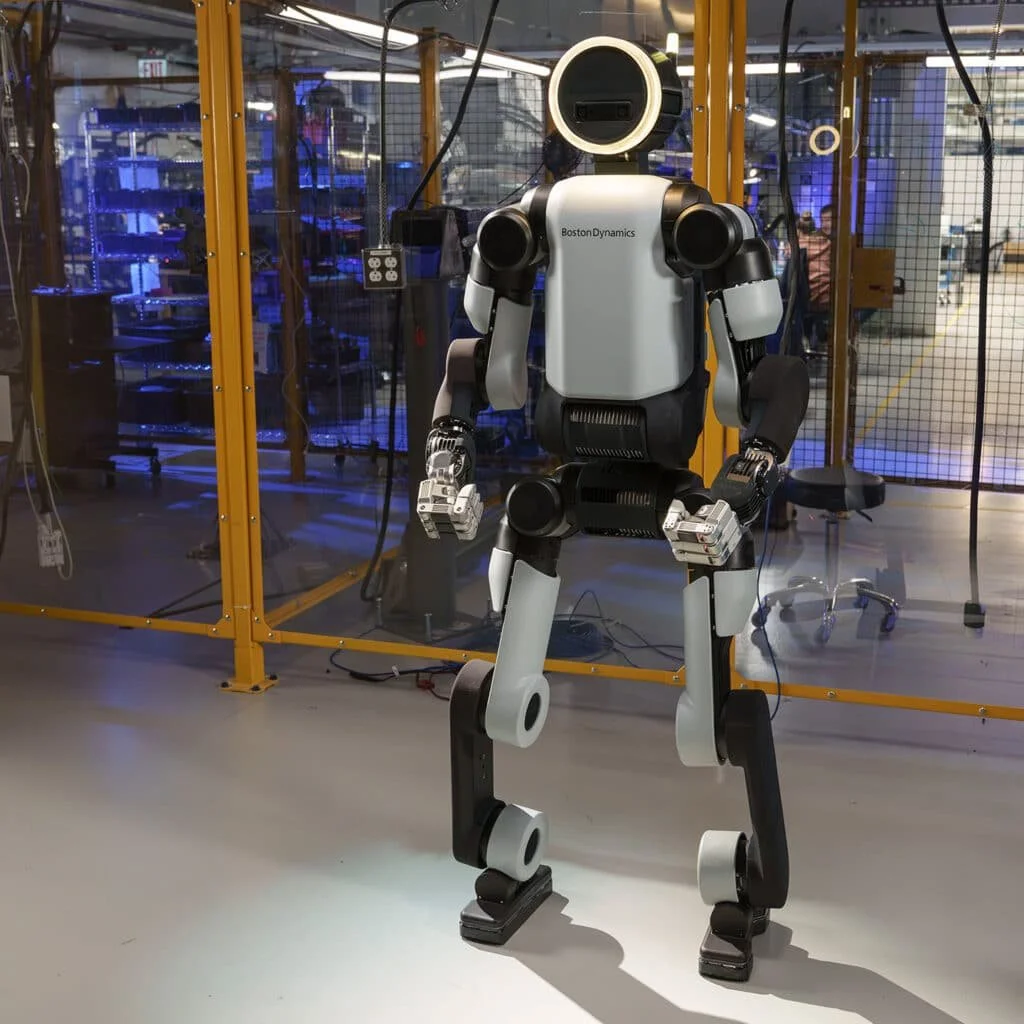
Atlas Robot
The line that frames everything Boston Dynamics told us:
"We believe that companies cannot go from zero to humanoid. Humanoids will be most effective if they are deployed with in-depth models of a facility and lots and lots of data about how it operates."
Most organisations reach for the most capable system and expect it to deliver. Boston Dynamics sees it differently: capability is earned, not bought. A humanoid only pays off once a business already has the data, the facility models and the workflows in place, and those come from deploying simpler robots first. As they put it, "the companies that will crack the code on humanoid value first are the ones who are already investing in other mobile robotics and AI solutions today."
Readiness, in other words, is the real head start.
Where robotics is already winning
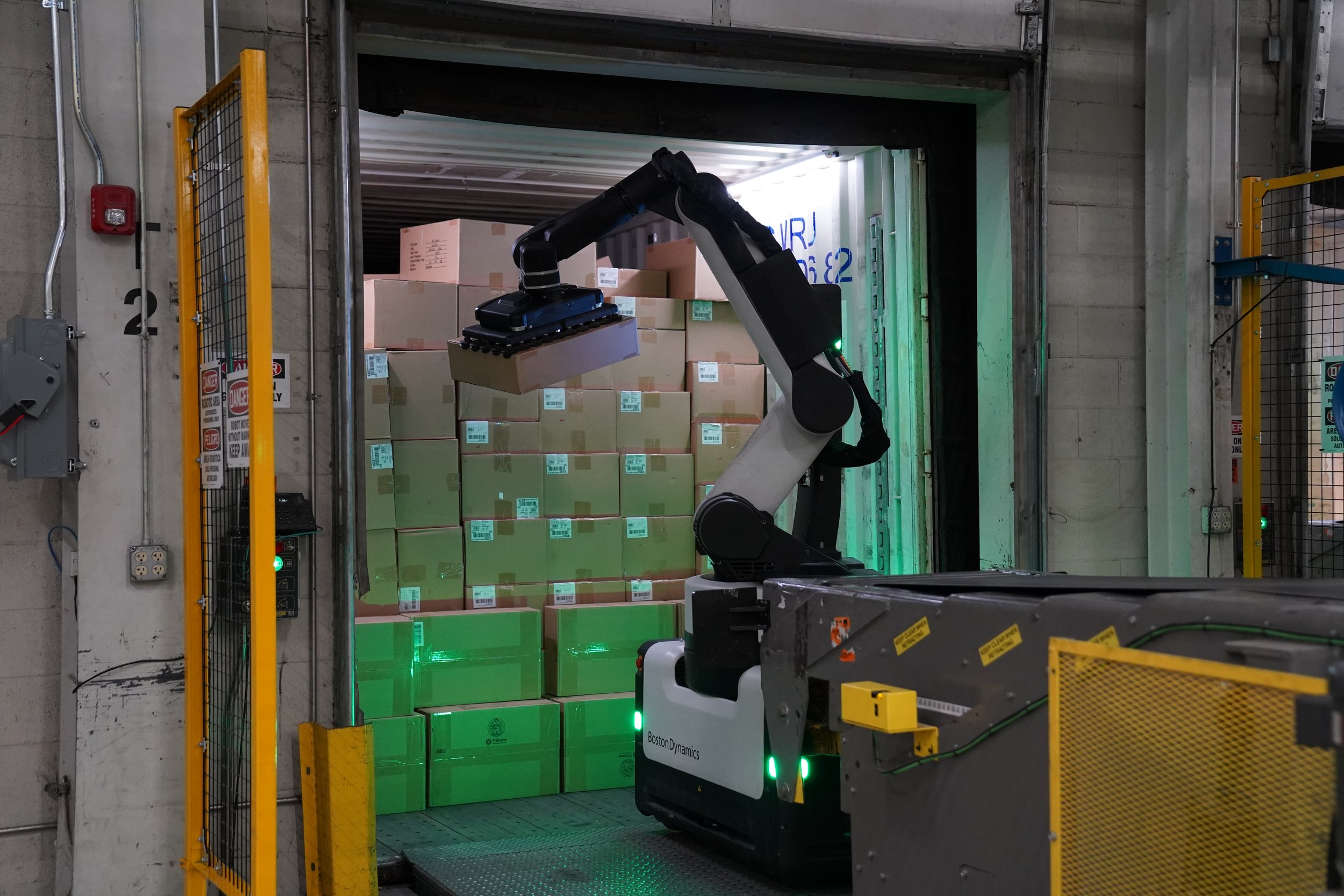
Atlas Robot
Boston Dynamics is specific about where adoption is real. Automotive, manufacturing and logistics lead, "driven by persistent labor shortages and the need to automate tasks that are repetitive, physically demanding, or dangerous."
The proof points are concrete. Atlas "will first be deployed at Hyundai, tackling part sequencing and other assembly tasks in their automotive manufacturing facilities," while in "distribution and logistics centers," Stretch is "automating the strenuous task of unloading trucks and shipping containers." Spot is "used by first responders to navigate dangerous environments that would otherwise put people at risk." The pattern isn't novelty, it's fit: "each industry is tailoring robotics to address its specific operational challenges."
It's a more honest picture than the headlines paint. Robots are winning where the work is dull, heavy or unsafe - reducing risk by assigning the dangerous, exhausting and repetitive tasks to machines instead of workers, exactly where the need is real enough to pull them in.
What AI actually changes
The current wave of robotics is inseparable from AI, and here Boston Dynamics is precise. "AI has helped push the robotics industry further and faster by tackling tough mobility and manipulation challenges," the spokesperson said. "Reinforcement learning enables our robots to stay stable on difficult terrain, while visual foundation models allow them to navigate new obstacles with much-needed context."
Looking ahead, "AI and foundation models will play an important role in robotics," and their newly announced partnership with Google DeepMind will integrate Gemini Robotics models into Spot and Atlas.
The direction is clear: machines that adapt in the moment rather than waiting to be reprogrammed, moving from controlled environments into critical infrastructure where every decision has real operational consequences.
Safety as the foundation
Safety is Boston Dynamics' main priority, and their answers here reveal how much of deployment is engineering nobody sees. Their robots are engineered to master three things: to "accurately perceive its surroundings, choose safe actions in real time, and maintain the stability needed to avoid falling."
Then the detail that says it all. In an emergency, "you can't just cut power and let it crash to the floor. We have to think about how a robot gets to the ground in the safest way possible." For Atlas, this becomes a "safety bubble": step within roughly two metres and it "immediately halts; it will maintain its grip on any payload but won't move an inch until the area is clear."
None of that appears in a launch video. All of it is what lets a robot work near people at all.
The mistake almost everyone makes
When asked what companies get wrong, Boston Dynamics didn't soften it: "Many organisations jump in too fast, assuming the rapid advancement of AI alone guarantees success. They often underestimate the physical reality of robotics, which requires years of hands-on experience. The road to commercialization and innovation is long, and deploying mobile robots at scale is an incredibly difficult challenge because the real world is far less predictable than the lab."
That underestimation;treating a strong technology as if it will carry itself to market is what we see stall good innovation across every sector we work in.
Beyond the factory
The factory is only the beginning, not the destination. Boston Dynamics envisions expanding into the service sector; including retail stores, restaurants, hospitals, and offices before moving into high-stakes environments such as nuclear decommissioning and disaster response. Further down the line, the company sees consumer robots becoming both useful and delightful in the home.
The next step is beyond the factory, into places where the work is too dangerous for people. But a robot that can handle a disaster zone or a nuclear facility is far harder to build than one that works on an assembly line. As with the energy transition, the promise is clear, but scaling it depends on safety, reliability, and accuracy.
Robotics and the energy transition
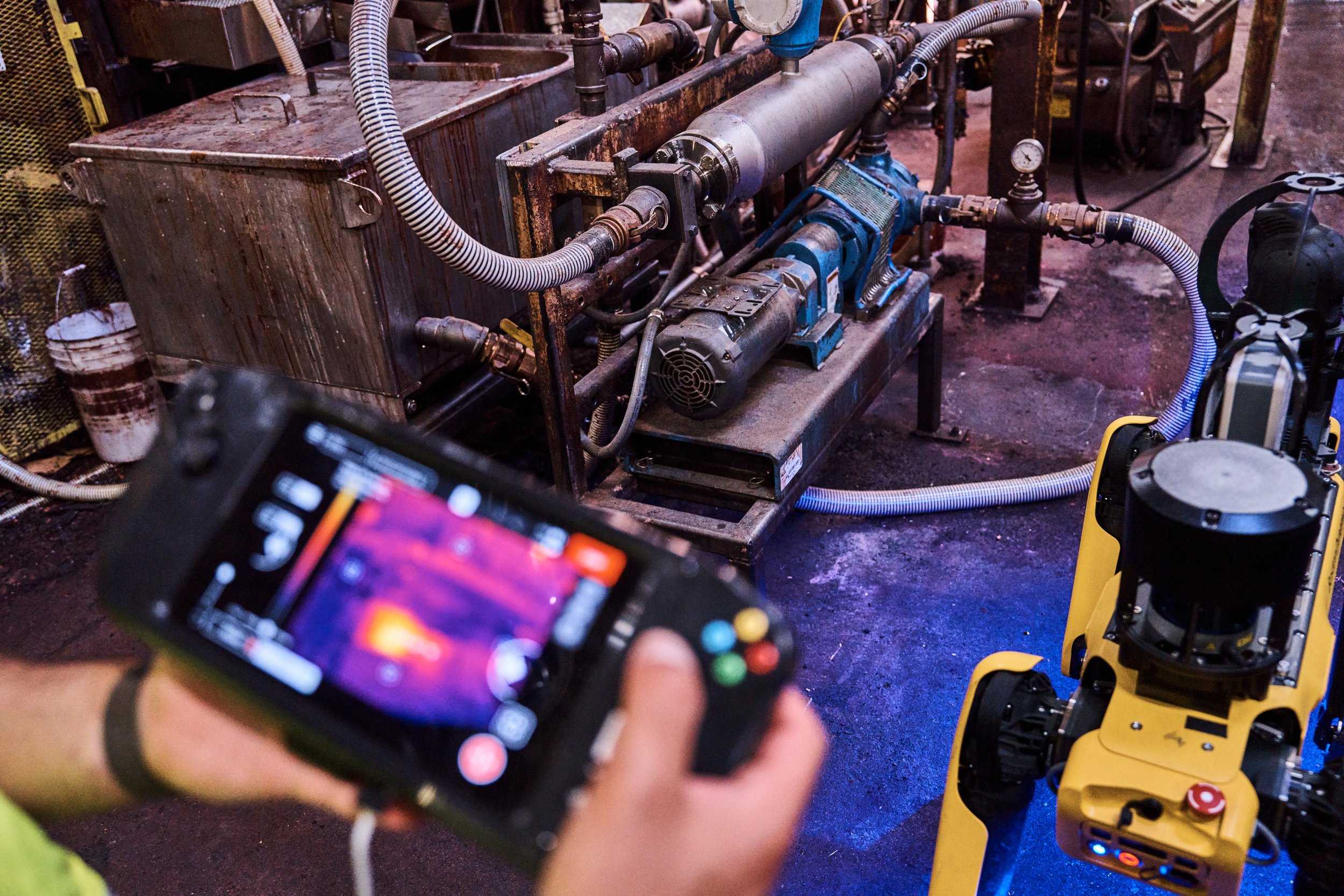
This was the answer closest to our world. Robotics is becoming an enabler of the energy transition by making critical infrastructure safer - taking people out of the most dangerous parts of running the systems we already depend on.
"We are already playing a key role in the sector by deploying agile robots like Spot to automate inspections in hazardous environments where humans shouldn't have to go." Across power, nuclear, and oil and gas facilities, the robots use "thermal and acoustic sensors to detect equipment failures, identify gas leaks, and map radiation levels, directly reducing human exposure to danger." And as the spokesperson put it: "By creating digital twins and performing autonomous rounds in remote sites or underground mines, this technology helps operators maximize uptime and ensure compliance without putting their teams at risk."
Inspection has long been one of the most hazardous tasks in energy, carrying an exposure that Boston Dynamics is now designing out - letting operators, in their words, "maximise uptime and ensure compliance without putting their teams at risk."
Demand, not just noise
We asked what we ask everyone in this series: is the excitement around robotics real, or are we heading into a bubble?
Boston Dynamics points to demand;"With the current state of technology as well as the acceleration of AI, we are moving in robotics at a much faster pace than ever before," the spokesperson said. "We're building production units of our robots as fast as we possibly can," with Hyundai's manufacturing expertise helping them scale "in a reliable, cost-efficient way." They read on the risk: "Having high expectations and too much demand are the exact kinds of problems we want for the future of this business." In a market where excitement and real traction are easy to confuse, orders a company is straining to fill is a signal worth noting.
Closing the Gap
For a conversation with a robotics company, remarkably little of it was about robots. It was about data, readiness, safety, industry fit, and years of hard-won experience, everything that surrounds the machine and determines whether it ever earns its place.
It's the same lesson we see in energy and clean shipping. That's why KAP is building two platforms with its partners Bridging the Gap: Energy Innovation Deployed and the Maritime Futures: Clean Shipping Regatta. Backed by UK government bodies and leaders from across the ecosystem, they exist to bridge the gap between proven and deployed by aligning the right people around risk and helping technologies scale where they're needed most.
Boston Dynamics puts it in five words: you cannot go from zero to humanoid. The same is true of the energy transition. There's no leap from innovation to deployment, only the work in between.
Part of KAP's expert series on AI and robotics in industry. All quotations are attributed to a Boston Dynamics spokesperson; the analysis is our own.
Want to feature in our newsletter or expert series? Get in touch at info@kantaradvisory.com
